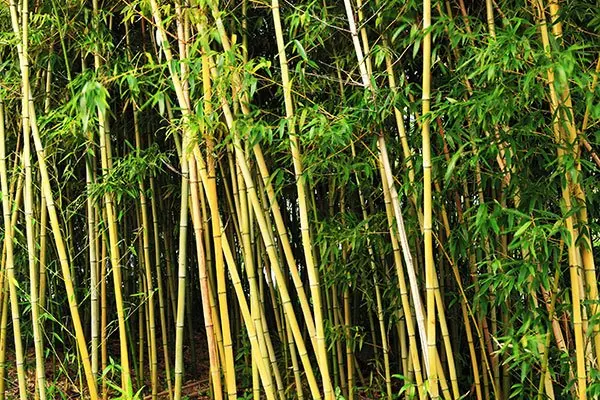
Why bamboo becomes a problem
Bamboo is a fast, dense screen, which is why it was planted along so many fence lines in the newer estates. Around Secret Harbour, Warnbro and Baldivis, sandy soil and summer reticulation give it everything it needs. A few years after planting, a neat row of canes can turn into a thicket that has spread under the fence, lifted paving and sent shoots into the lawn.
The problem lies underground. Bamboo spreads by rhizomes: horizontal stems that run just below the surface, storing energy and putting up new canes along their length. Cut the canes and the rhizomes simply send up more.
Running and clumping types
Running bamboo sends rhizomes out a long way from the original plant. It is the type that crosses boundaries, comes up through paving and appears in garden beds metres away. It is the harder of the two to remove completely.
Clumping bamboo grows in a tight mass that expands outward slowly. It is easier to contain and remove, though a mature clump is a very heavy, tangled root mass that takes real effort to get out.
If you are unsure which you have, look at how the canes are spread. Canes appearing in a line or scattered well away from the main group usually means a running type.
How bamboo is removed
- Canes cut. All canes are cut down close to the ground and removed or chipped. Bamboo canes are tough and can be sharp when cut.
- Rhizomes exposed. The area is dug to expose the rhizome network. In sand this is usually done with hand tools or a small excavator, depending on the size of the patch.
- Rhizomes lifted. The rhizome mat is lifted out in sections. Pieces running under fences, paving or into the neighbour's yard are followed or cut at the boundary.
- Ground cleaned and levelled. Loose pieces are raked out and the area is levelled for whatever comes next.
Grinding is sometimes used on large clumps to break up the root mass, but grinding alone tends to leave fragments that reshoot.
Root barriers
If you want to keep some bamboo, or your neighbour's bamboo is the source, a root barrier can help. This is a strip of tough material installed vertically in the ground to stop rhizomes crossing. It needs to be deep enough and properly joined to work. Ask whether it is worth including in the quote.
Following up
Even a careful removal can leave small rhizome pieces in the ground. Over the next growing season, pull or cut any new shoots as soon as they appear. They are weak at that stage, and removing them consistently stops the remaining pieces from establishing.

Bamboo and the neighbours
Bamboo disputes are common because the plant does not respect fences. If the bamboo is on your neighbour's side, talking to them before any work starts is the best approach. If your bamboo is spreading next door, removing it on both sides at once is usually more effective and avoids disputes.
Getting a price
Bamboo removal is priced on the size of the area, the type of bamboo, how deep and wide the rhizomes run, access for machinery and disposal of the material. See the cost guide for how prices are put together. For a written quote, call (08) 9515 3848 or send the form with a photo of the patch and the access.