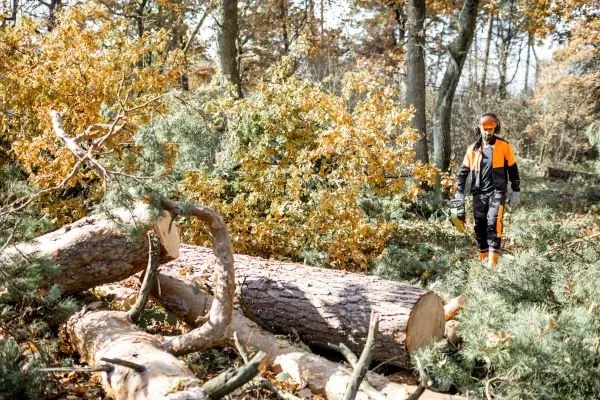
When removal is the right answer
Trees on the coast earn their place. They break the sea breeze, shade a west-facing living room and give the honeyeaters somewhere to sit. We would rather see a tree reduced than lost when that will do the job. But there are trees where pruning only delays the problem, and in those cases removal is the safe and sensible call.
The situations we hear about most around Secret Harbour, Warnbro and Port Kennedy:
- The tree has died. Drought stress, borers, root damage from earthworks or simply old age. A dead eucalypt or pine dries out and becomes brittle quickly in our summers, and it gets more dangerous to climb the longer it stands.
- The lean is new. Many coastal trees grow with a lean away from the sea breeze, and that is normal. A lean that has increased, with lifted sand or a crack on the opposite side of the trunk, is not.
- A main fork has split. Tight V-shaped forks with bark trapped between the stems are a known failure point, particularly in some eucalypts.
- It is in the way. A pool, a granny flat, a patio extension or a new driveway. Shallow roots in sand travel a long way, and a tree three metres from a pool shell can still be a problem.
- Repeated limb drop. Some trees drop branches over the roof, the cars or the trampoline year after year.
Sectional removal on tight blocks
The newer streets in Secret Harbour and Golden Bay have small yards, narrow side access and neighbours on three sides. Felling a tree whole is rarely possible. Instead, a climber works down from the top, cutting short sections that are lowered on ropes to a ground crew. Where a platform can reach, the operator cuts from the bucket instead. Either way, nothing should be dropped on a roof, fence or pergola.
Access is often the biggest variable in how long the job takes. If everything has to be carried through a 900 mm side gate, it takes longer than if a chipper can be backed up to the tree. Measuring the gate and mentioning any steps or retaining walls when you call helps the contractor plan.
Larger lots in Baldivis, Karnup and Singleton
Further inland and on the edges of the area, lots are bigger and trees are often older. Remnant tuarts, banksias and paperbarks may stand on semi-rural blocks. Here the trees can often be felled more directly, but they are heavier, and the rules can differ: the City of Rockingham treats native vegetation on rural and special rural zoned land differently from a standard house lot. Check with the City before removing native trees on those blocks.
Before the crew arrives
- Move cars, boats and caravans clear of the work zone.
- Tell the contractor where the reticulation lines and any septic or soak wells run.
- Let neighbours know if branches overhang their side or a truck will be parked on the street.
- Keep children and pets inside while cutting is underway.
After the tree is down
The quote should say what the block looks like when the crew leaves. Usually that means branches chipped, logs cut and removed, and sand or lawn raked. If the stump is staying, decide whether you want it cut flush or ground out; stump grinding is normally done the same day or soon after. If you are replacing the tree, ask about a species that suits the spot: something that tolerates salt and sand and will not reach the roof in ten years.
Prices and next step
Tree removal prices depend on height, access, what sits under the canopy, and whether the stump and timber are included. The cost guide has 2026 planning bands. For a firm figure, call (08) 9515 3848 or send the form and a local contractor will come out to quote in writing.