Grinding versus removal
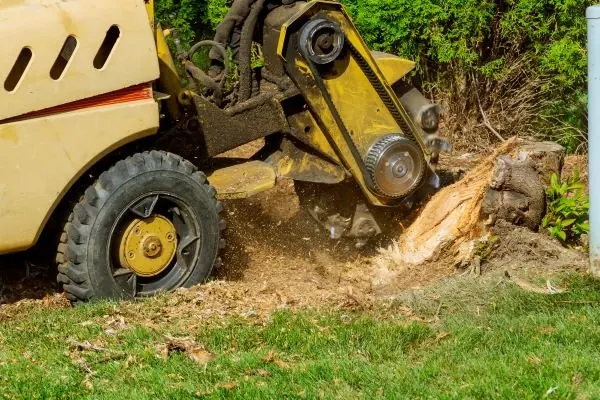
There are two ways to deal with a stump. Grinding uses a machine with a toothed cutting wheel to chew the stump down into chips, leaving the deeper roots to rot away in the ground. Full stump removal digs the whole stump and its main roots out. Grinding is quicker, tidier and cheaper for most garden situations. Removal is for when the ground needs to be clear for building or paving.
For a lawn, a garden bed or a new tree planted a little to one side, grinding is usually all you need.
Why stumps behave differently in sand
On most Secret Harbour, Golden Bay and Warnbro blocks, the stump sits in loose dune sand. That has two effects. First, the sand is easy for a grinder to work through, so the job is often quicker than in heavy clay. Second, trees in sand grow wide, shallow roots, sometimes running several metres from the trunk just under the lawn. Grinding the main stump does not deal with those surface roots on its own. If roots are lifting paving or making the lawn lumpy, ask for them to be chased out along their length and include that on the quote.
Limestone is another local feature. On some coastal blocks there is limestone not far below the surface, and the occasional rock wedged among the roots. Operators watch for it, because hitting stone damages the cutting teeth. If you know there is limestone under your yard, say so.
Getting the machine in
Grinders range from compact units that fit through a standard side gate to large tracked machines for open sites. Most newer homes in the area have narrow side access, so the operator needs to know the narrowest width before they arrive. Steps, retaining walls, soft sand and a steep driveway all affect which machine can be used. A quick photo of the access with a tape measure across it helps.
Before and after the grind
Before: mark the reticulation lines and sprinkler heads near the stump, and move pots, furniture and cars well back. Grinders throw chip and sand, and operators use shields, but clear space is still the safest plan.
After: the hole fills with grindings. Because chip breaks down and settles, it is common to remove the bulk of it, top up with clean sand or soil, and allow for a little more settling before laying turf or paving. If you are planting a new tree, plant it a short distance from the old stump rather than right on top.
Stumps left by other jobs
Many stumps we are asked about were left years ago after a removal. Old stumps can be softer and break apart easily, or very hard if the timber is dense. Some have suckers growing from the base. Either way, a grinder deals with them. If you are having a tree removed now, getting the stump ground at the same visit is usually the simplest approach; see tree removal.
Palms and bamboo
Palm stumps are fibrous rather than woody and grind differently, and the root ball is a mass of thin roots rather than a few big ones. Bamboo is a different job altogether, because the rhizomes spread sideways and need to be removed rather than ground in one spot. The palm tree removal and bamboo removal pages cover those.
Pricing
Stump grinding is usually priced by the stump's size and number, the depth, the access and what happens to the grindings. Several stumps on one visit are often better value than separate trips. The cost guide has 2026 planning bands. For a written quote, call (08) 9515 3848 or use the form.