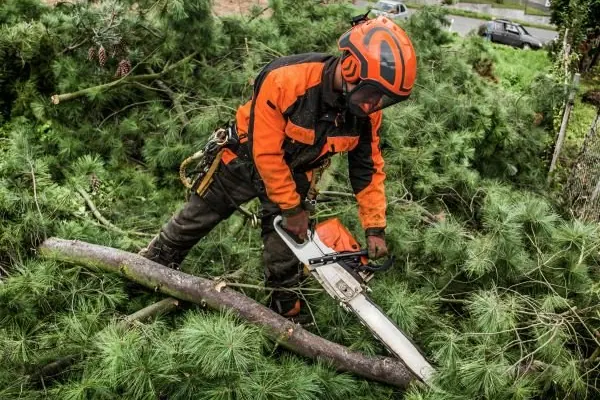
What a tree lopper does on a Secret Harbour block
Most of the lopping we arrange is about one thing: a tree that was the right size fifteen years ago and is not any more. The estates around Secret Harbour, Golden Bay and Port Kennedy were planted with species that grow quickly in sand when they get garden water. Peppermints, eucalypts, pines and ornamental figs all fill a small backyard faster than people expect, and the result is a canopy across the roof, leaves in the gutters and a lawn that never sees the sun.
A tree lopper's job is to reduce that tree so it fits the space again. The skill is in where the cuts go. A limb cut back to a healthy side branch keeps growing in a controlled direction and seals over. A limb cut off halfway along leaves a stub that sprouts a brush of water shoots, and those shoots are poorly attached and break easily a few years later. Ask any contractor quoting your job how they plan to cut, and expect a clear answer.
The jobs that fall under lopping
- Crown reduction. Bringing the overall height and spread back while keeping the natural shape.
- Crown lifting. Removing lower limbs so you can walk, mow or park underneath, or so a caravan or boat fits down the side.
- Clearance pruning. Pulling branches back from the roof, gutters, solar panels, the pool fence or the service wire.
- Deadwooding. Cutting out dead branches, which on the coast are often concentrated on the side facing the sea breeze.
- Thinning. Taking out crossing and crowded branches so wind passes through the canopy rather than pushing against it.
- Palm cleaning. Removing dead fronds and seed stalks; see our palm tree removal page for more.
Coastal factors that change the plan
Salt and wind shape almost every tree near the beach. The sea-facing side of a canopy tends to be thinner and carry more dead twigs, while the sheltered side grows long and heavy. Left alone, that imbalance pulls the tree in one direction, often toward the house because the house is what provides the shelter. A careful reduction on the heavy side, combined with deadwooding on the exposed side, is a common recommendation.
The sand matters too. Trees on dune sand rely on wide, shallow roots for anchorage. Heavy, one-sided canopies on shallow roots are the combination that worries people during winter fronts. Lopping cannot fix the roots, but reducing the sail area of the crown reduces how hard the wind can push.
Finally, coastal blocks are often tight. Side gates on newer houses may be narrow, there may be a retaining wall or limestone steps, and the back fence may be shared with three neighbours. Branches are usually lowered on ropes rather than dropped, so nothing lands on the patio roof or the neighbour's shed.
Lopping or removal?
Sometimes the honest answer is that lopping will not solve the problem. If a tree is dead, split at a main fork, leaning further than it used to, or sitting where a pool or extension is going, removal may be the better choice. Our tree removal page covers those situations. Equally, plenty of people ring asking for a tree to be taken out when a reduction would deal with what actually bothers them: the shade, the leaves or one heavy limb. Talk it through at the on-site look.
Council and verge trees
Secret Harbour is in the City of Rockingham. The City's published position is that its planning scheme does not require approval to remove trees on standard residential lots, although rural and special rural land is treated differently. The tree on the verge out the front is a street tree managed by the City, so report problems with it to the City rather than cutting it. If you are unsure whether rules apply to your tree, check with the City before work starts.
Getting a price
Lopping prices vary with the size of the tree, how much comes off, whether a climber or an elevated platform is needed, and how far the waste has to be carried. Planning bands for 2026 are on the cost guide. For your tree, call (08) 9515 3848 or use the form, and a local contractor will come to see it and quote in writing.