Palms on the coast
Palms are everywhere around Secret Harbour, Port Kennedy and Golden Bay. Tall Washingtonia fan palms line streets and front yards, Canary Island date palms anchor older gardens, and cocos (queen) palms were a popular choice beside pools. They handle sand, salt and heat well, which is why so many were planted. The problems come later: palms keep getting taller, they hold onto dead fronds, and they produce heavy seed stalks and fruit that drop on paving, cars and pool decks.
Cleaning versus removal
Many palm jobs are not removals at all. A palm clean means removing the dead and dying fronds hanging below the green crown, cutting off seed stalks and fruit clusters, and tidying the trunk. On a Washingtonia, the skirt of old fronds can build up over years and becomes a fire risk and a home for pests. A clean palm looks better and drops less.
Full removal makes sense when a palm has outgrown its spot, is leaning toward the house, is too close to the pool or foundations, or you simply no longer want the maintenance. Removal is also common when renovating, because palm roots, while not invasive like some trees, form a dense mat that gets in the way of new paving and garden beds.
How tall palms come down
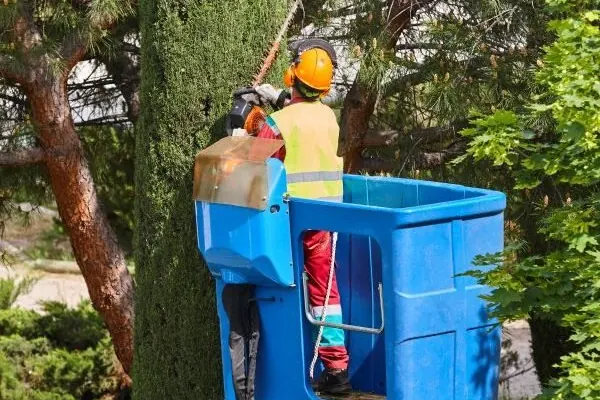
A palm cannot be lopped like a tree with branches. Once the crown is cut, the palm is finished. Tall palms near houses are usually taken down in sections from the top: the crown is removed first, then the trunk is cut into pieces that are lowered on ropes. Where access allows, an elevated work platform makes the job quicker and safer. Very tall palms in tight spots can need a crane, and that changes the cost significantly.
Palm trunk sections are heavy for their size. Getting them through a narrow side gate is part of the planning, so the access matters as much as the height.
Waste and disposal
Palm material does not behave like timber. Fronds are fibrous, trunk sections are dense and stringy, and some species have spines on the frond bases. Ordinary chippers struggle with it, so most palm waste is carted away rather than chipped and left. The quote should say how the waste is handled.
Stumps and root balls
A palm leaves a stump of fibrous trunk and a compact ball of thin roots. It can be left to break down slowly, or ground out to replant or pave. Grinding a palm stump is different from grinding a hardwood stump; see stump grinding for how it works.
Safety notes
- Dead fronds on tall palms can fall without warning in strong wind. Keep cars and play equipment clear in the meantime.
- Palms near the overhead service line to the house need an authorised contractor; mention any wires when you call.
- Some palm fronds have sharp spines at the base. Do not try to pull dead fronds down by hand from a ladder.
Getting a quote
Palm work is priced by height, number, access and disposal. Cleaning several palms in one visit is usually more efficient than separate trips. See the cost guide for how removal prices are banded. For a written quote, call (08) 9515 3848 or send the form, ideally with a photo of each palm and the access to it.
If you are unsure whether a palm is worth keeping, ask the contractor at the on-site look. A cleaned palm can look very different from one carrying years of dead fronds.